 Insights
Financing the Journey from Desalination Plant to Tap
Jordan's latest water-finance announcement shows why a major supply project needs matching investment in the network that receives its water. For infrastructure lenders and investors, the connecting works, completion dates and payment arrangements deserve attention alongside the headline plant.
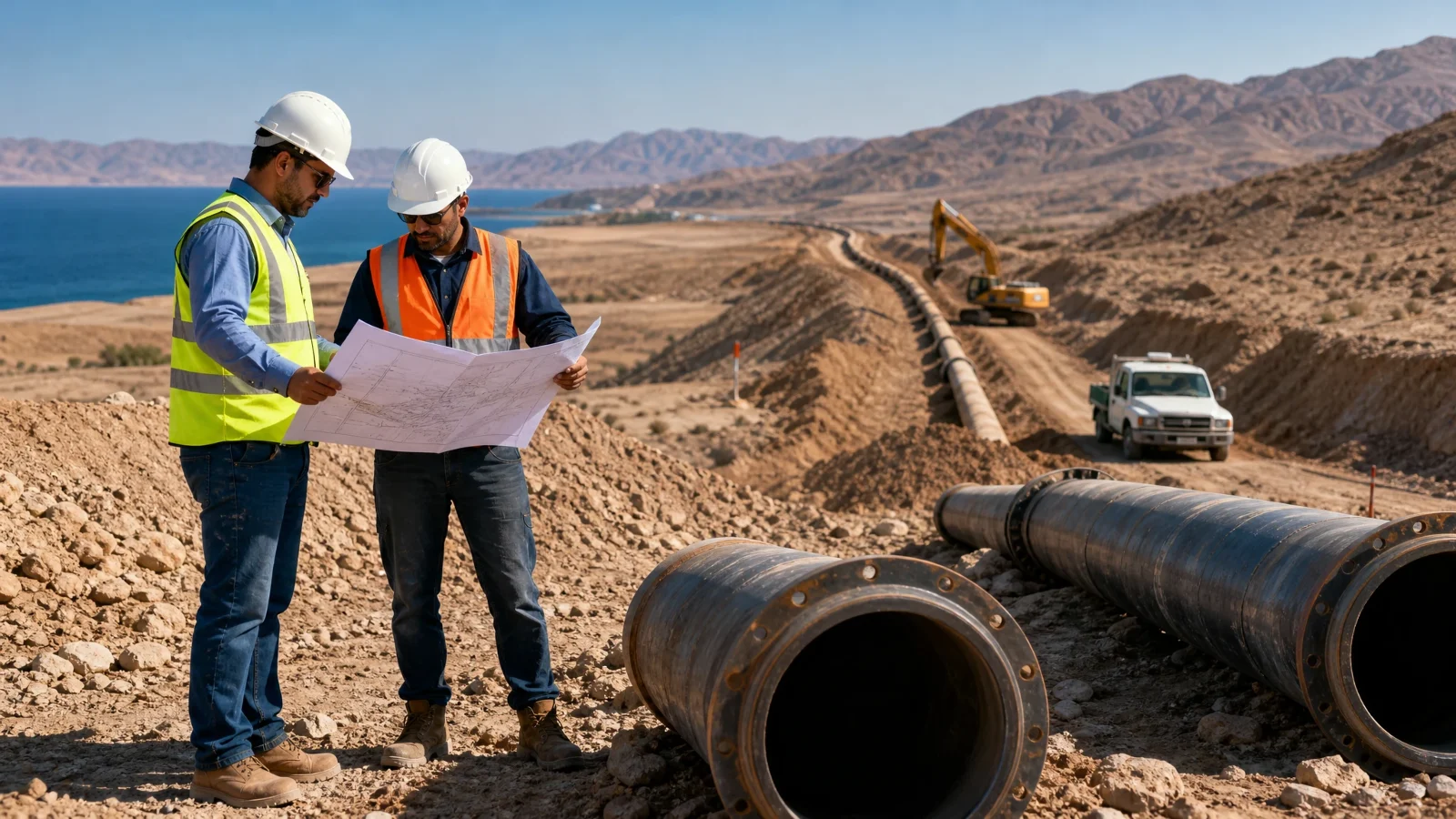
Jordan's planned Aqaba-Amman water system is designed to turn seawater from the Red Sea into drinking water and carry it towards the country's demand centres. The European Investment Bank's 19 November 2026 announcement describes capacity of 300 million cubic metres a year and a conveyance route of approximately 445 kilometres. Delivering that water also requires a network ready to receive it. EIB's announcement
That last part is a useful financing story in its own right. A production asset and the infrastructure connecting it to users have different work programmes, funding needs and completion risks. An assessment of the overall service needs to follow the water through those connections, even when the investments sit in separate financing packages.
Read the announcement as two connected investments
The EIB said it was finalising a US$400 million project-finance loan for the desalination and conveyance project. Separately, a non-binding letter of intent set out potential support for the receiving infrastructure. These stages should stay visible when the announcement is condensed into a funding summary.
| Financing described on 19 November | Purpose | Status stated in the announcement |
|---|---|---|
| US$400 million EIB project-finance loan | Aqaba-Amman desalination and conveyance investment. | Being finalised. |
| Up to EUR200 million of EIB support | National Conveyance Readiness Infrastructure Project. | Intention in a non-binding letter; approvals and contracts still required. |
| EUR50 million EU investment grant | Complementary readiness-infrastructure package. | Proposed. |
The table keeps the currencies and stages separate. Adding the amounts into a single total would require an exchange-rate basis and would still combine financing with different degrees of commitment. For a lender or project sponsor, the more useful first question is which part of the service each amount is intended to support and what remains to happen before it can be relied upon.
It also matters which works sit inside a particular financing scope. A project can have a substantial funding package while a necessary connection remains subject to another decision. The practical task is to identify that dependency early and establish how it will be managed.
Follow the water through the receiving network
The EIB's environmental and social data sheet, dated 18 November, describes receiving works including transmission pipelines, reservoirs, pumping stations and primary distribution infrastructure. It says components are at different development stages, with final routes, land needs and some authority decisions still to be established through detailed design. Those are identified preparation tasks, rather than evidence that every connection is ready to build. Readiness-project data sheet
- Produce drinking water at the desalination plant.
- Convey the water towards the receiving systems.
- Receive, store and move the additional supply through the network.
- Deliver the service to users through connected distribution infrastructure.
The flow shows physical functions. It does not assign legal responsibility or establish a payment entitlement. Its value is to make the connections visible before an analyst reads the contracts and programme for each part.
For example, consider a hypothetical project in which a new treatment plant completes before its receiving reservoir. The plant may pass its own technical tests while the complete service remains constrained by storage capacity. The relevant questions would include the permitted interim operating arrangement, who must complete the reservoir and how a delay affects payments. This example illustrates an interface risk; it is not a report of a delay in Jordan.
An effective completion plan would therefore compare the readiness of the connected works, rather than merely list their separate completion dates. It would show the capacity available at each interface and the evidence required to accept the next stage of the service.
Connect engineering performance with the payment arrangement
The financial effect of a physical constraint depends on the contract. World Bank PPP guidance distinguishes user-funded arrangements from government payment models, including payments linked to infrastructure being available at an agreed standard. Its broader point is that the payment mechanism and allocation of risk need to fit the service. That background does not establish which terms apply to the Jordan project. World Bank: structuring the PPP contract
A lender examining a water project would want to know what earns a payment: water accepted at a delivery point, specified capacity being available, another service measure or a combination. It would also need to understand the consequences of an interruption in an adjacent asset. The plant's engineering capability and the borrower's right to receive money are connected questions that need different evidence.
This makes the boundary between assets commercially significant. Metering, quality testing and acceptance at a delivery point can determine how performance is recorded. A review would ask which party controls each requirement and how a failure is resolved. The actual agreements are needed to answer those questions for a particular project.
Track readiness alongside the financing
The next informative milestones for the announced investments include completion of the financing processes and progress on the receiving works. The data sheet provides a basis for following design, land and assessment tasks as they become defined. A useful progress report would connect those developments with the facilities that depend on them.
For investors and lenders, the case illustrates why a large infrastructure programme benefits from two parallel views. One tracks the status and scope of the money. The other follows the physical route by which the investment becomes a service. Keeping those views connected makes it easier to spot a gap before it affects commissioning or operation.
The value of a new water source is realised through reliable delivery. Financing the plant, the long-distance route and the receiving network as connected parts gives that outcome a clearer place in the investment assessment.
Sources
- European Investment Bank: Jordan water-system financing announcement, 19 November 2026.
- European Investment Bank: National Conveyance Readiness Infrastructure environmental and social data sheet, 18 November 2026.
- World Bank PPP Resource Center: structuring the PPP contract; background on payment mechanisms and risk allocation.