 Insights
All insights
Search and filter every published DaDepo guide for preparing document-backed assets.
Browse by topic
All Topics represented in published guidance.
Browse guides
Search and filter published English guidance by audience, asset type, journey stage, or Topic.
Guidance desk
1–11 of 11 published guides-
01
 Guide
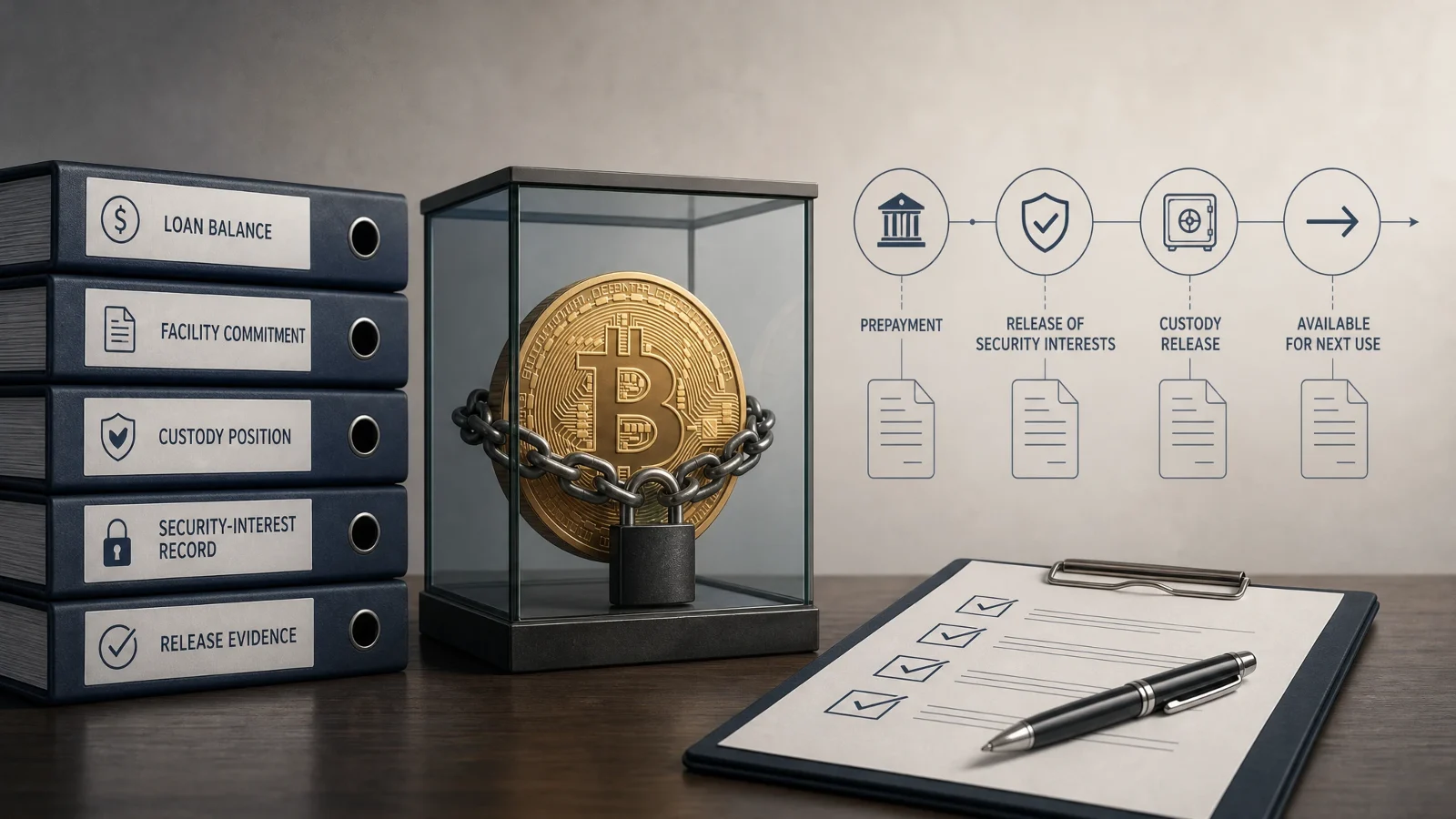
The Loan Is Repaid. Is the Bitcoin Free? The Evidence Behind Collateral Release
Riot Platforms' September 2026 payoff shows why debt repayment, custody and release from a lender's security interest need separate records. Its changing bitcoin collateral balances also show why a dated quantity cannot be treated as the amount released months later. A useful review connects each event to its source, scope and effective date.
Read article- Audience
- Lender
- Asset
- Secured loan
- Stage
- Learn
- Topics
- collateral secured lending custody
-
02
 Guide
The Project Was Funded. The Debt Did Not Move: What $18 Billion of AI Loans Reveals About Distribution Risk
Project Jupiter, a New Mexico data-center development linked to Oracle and OpenAI, raised about $18 billion of project-finance loans from a large bank group in late 2025. The financing was designed to be distributed more broadly to banks and institutional investors. By September 2026, however, Financial Times reporting cited by Reuters said syndicate banks were quoting the loans at 89–91 cents on the dollar and that attempts to sell the debt more widely had stalled, leaving banks with more...
Read article- Audience
- Credit manager
- Asset
- Secured loan
- Stage
- Learn
-
03
 Guide
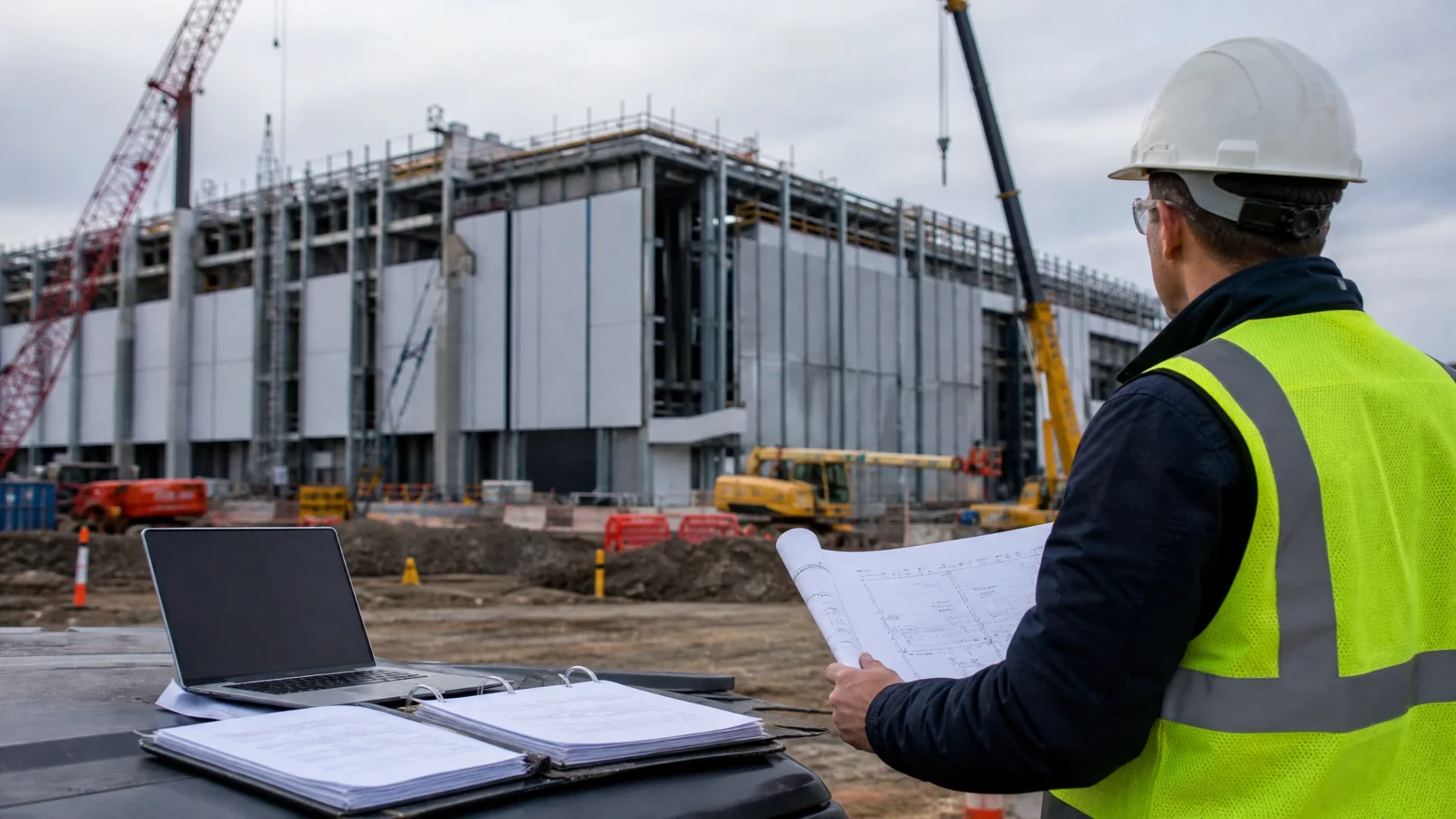
The Collateral Is Not Enough: Why AI Data-Center Debt Is Becoming Milestone-Backed Finance
AI infrastructure borrowing has reached extraordinary scale, but lenders are becoming more selective about when committed capital can actually be drawn. Reuters reported in September 2026 that AI-related debt issuance had reached nearly $500 billion through early August, while data-center financing increasingly requires evidence such as permits and signed leases before construction funding becomes available. Galaxy’s Helios project shows the other side of the same problem: $3.5 billion of...
Read article- Audience
- Lender
- Asset
- Secured loan
- Stage
- Learn
- Topics
- project finance data centers construction risk
-
04
 Guide
When a Loan Portfolio Becomes Central-Bank Collateral: Eligibility Is an Asset State
British banks are increasingly mobilising less-liquid credit assets through the Bank of England’s Sterling Monetary Framework. Level C collateral held by the Bank more than doubled over the year to £17.8 billion, while the eligible universe includes residential mortgages, consumer and auto loans, asset finance, corporate and SME loans and other loan portfolios. The deeper lesson is that a loan does not become central-bank collateral merely because it exists: eligibility depends on portfolio...
Read article- Audience
- Credit manager
- Asset
- Secured loan
- Stage
- Learn
- Topics
- central bank collateral collateral asset readiness
-
05Guide
When the Collateral Is Compute: What a GPU-Backed Loan Actually Owns
GPU-backed private credit is developing into a distinct form of equipment and infrastructure finance. Bullish provided USD.AI with a $100 million stablecoin-based facility in August 2026 to support loans secured by high-performance computing assets, while USD.AI reported more than $281 million of lifetime deployed capital across GPU financings by month-end. The challenge is that the collateral is mobile, rapidly depreciating, technically specialised and economically dependent on data-centre...
Read article- Audience
- Credit manager
- Asset
- Secured loan
- Stage
- Learn
- Topics
- asset backed finance collateral asset identity
-
06Guide
A Maturity Extension Is Not a Refinance: Why Private Credit Needs Loan-State History
US software borrowers are increasingly using amend-and-extend transactions to push debt maturities out by two or three years while lenders demand higher pricing, tighter covenants, stronger collateral protections and better reporting. The loan can remain the same legal asset while its contractual and economic state changes materially. That makes amendment history, consent provenance and effective-dated loan terms essential infrastructure for private credit.
Read article- Audience
- Credit manager
- Asset
- Secured loan
- Stage
- Learn
-
07Guide
Buying Your Own Debt Is Not the Same as Cancelling It: Why Loan Ownership Needs a Lifecycle
Guggenheim’s August 2026 purchase of portions of a roughly $1.2 billion loan linked to its asset-management business illustrates a subtle but important loan-state problem. An affiliate can buy debt in the secondary market and hold it as an investment while the loan remains outstanding. Holder, borrower, related-party status, market price, outstanding principal and cancellation are therefore separate states that a reliable private-credit record needs to preserve.
Read article- Audience
- Credit manager
- Asset
- Secured loan
- Stage
- Learn
-
08Guide
The Financing That Stays With the Building: Why C-PACE Is Becoming an Institutional Asset Class
Commercial Property Assessed Clean Energy finance is moving from a specialist sustainability product into institutional real-estate credit. Nuveen’s fourth C-PACE lending fund reached a first close above $1 billion in August 2026, taking commitments across the series above $3 billion. The unusual part is the asset itself: repayment is structured through a property assessment, the obligation is tied to the property rather than only its current owner, and the resulting lien must coexist with...
Read article- Audience
- Credit manager
- Asset
- Secured loan
- Stage
- Learn
-
09Guide
The Fund Is Liquid Until the Loans Are Not: What Private Credit Investors Actually Own
Australia’s private-credit market is confronting a problem regulators had already warned about: open-ended funds can offer periodic investor liquidity while the underlying property and development loans remain difficult to realise quickly. The August 2026 restrictions at CVS Lane, Centuria Bass and MA Financial show why fund units, redemption rights, loan assets, collateral and borrower cash flows need to be understood as different objects with different liquidity.
Read article- Audience
- Asset manager
- Asset
- Secured loan
- Stage
- Learn
-
10Guide
When the Loan Does Not Move but the Risk Does: The Asset Anatomy of Synthetic Risk Transfer
Synthetic risk transfer is expanding as banks use funded investors and increasingly insurers to transfer defined credit-loss layers without selling the underlying loans. In 2025, insurers provided about €4.7 billion of new unfunded SRT protection, while €10.9 billion of outstanding insured tranches were linked to roughly €366 billion of loans. The structure exposes a fundamental asset-data question: legal ownership of the loan, economic exposure to the borrower and contractual responsibility for
Read article- Audience
- Asset manager
- Asset
- Secured loan
- Stage
- Learn
-
11Guide
Collateral Is Not Static: What the ECB’s New Climate Factor Means for Secured Credit
The ECB is extending climate factors to certain non-financial corporate credit claims used as Eurosystem collateral. The decision is a useful reminder for lenders: collateral value, borrower risk and supporting evidence can change after origination, so a secured-loan record should remain current and reviewable throughout its lifecycle.
Read article- Audience
- Lender
- Asset
- Secured loan
- Stage
- Learn